Thursday, September 26, 2019

Blog Journal 3

There are some ELA technology standards for second grade that I feel more prepared to teach than others. One of the standards that I feel as though I have knowledge in is using "information gained from the illustrations and words in a print or digital text to demonstrate understanding of its characters, setting, or plot." I feel like I have been prepared well in this area of technology, and I think I work well with online poster creators and similar programs. I enjoy using these programs to be creative and make beautiful content, and I feel like I could teach my students how to use these programs efficiently for projects. One other standard I feel most prepared to teach is "determine or clarify the meaning of unknown and multiple meaning words and phrases based on grade 2 reading and content, choosing flexibly from an array of strategies." I feel like I am prepared to teach this standard because I have a proficient vocabulary, and I also know how to use and look up words in online dictionaries and thesauruses. I think this standard would be a very easy standard to teach because of the ease of use of online dictionaries. On the other hand, at the moment, I need to develop my skills in one other area. This area is the standard which states "with guidance and support from adults, use a variety of digital tools to produce and publish writing, including in collaboration with peers." This standard includes having a knowledge of usage of technology such as SmartBoards and pixlr. I never used SmartBoards or pixlr growing up, so I would have to do more learning on this standard so that I can be as prepared as possible to teach it. Overall, however, I feel confident with these standards, and I know that as I continue with my education classes, I will be able to learn how to approach these standards well.

 One of the resources in the CPALMS Educator Toolkit is the instructional resources, which includes lesson plans. These lesson plans are provided for every subject. Each lesson plan is developed uniquely for a specific purpose. For example, one of the lesson plans provided for the Science portion of a class talks all about the dangers of feeding wild animals, especially alligators. It then provides an overview of what the lesson should look like, and it provides a PowerPoint and some other instructional visual aids. Through these lesson plans, teachers have ease of access to state accepted lessons, and teachers don't have to worry about completely preparing lessons on their own. I would use this resource in my classroom because it is an incredible way to take stress off of my position. Rather than having to come up with fun and exciting new ways for my students to learn, I now have amazing lesson plans right at my fingertips! The PowerPoints and other interactive visual aids are already set up for me. All I truly need to do is download the lesson plan and teach it! For these reasons, the CPALMS Educator Toolkit is an amazing resource for teachers in Florida, and I know I will be utilizing it in the future, especially through the lesson plans.

 The Newsletter Design assignment was very fun to complete, and I learned a lot by completing this project. I learned many new skills through Microsoft Word as well. I first learned how to create columns in a Word document. I did not know how to do this action before, but I now know how to find the column button in the tool bar and create columns in order to make something look more professional and put together. I also learned how to create word art, which is what I did for my newsletter title, and I learned how to add in the date by just pushing a button. Overall, I really love how the newsletter turned out! I love the fall design and colors that I used. I also like the extra little details that I added to the text, such as clip art as visual aids and to make the letter more fun to look at. I put a lot of time and effort into this assignment. The only thing I would want to improve on for the next time is making the permission slip look more professional and adding even more visuals and perhaps a border. What I learned from this assignment can be used in my future career as a teacher. By understanding and truly drilling into my brain a lot of the functions on Microsoft Word, I will be able to make not only newsletters, but also lesson plans, quizzes, and tests. The skills that I learned will help me to create things for my class much more quickly than I would have been able to do before. I will also be able to add a plethora of pictures and visual aids to my presentations in class, which are very important in order to keep young second graders focused and interested!


Wednesday, September 18, 2019

Blog Journal 2


I have learned about and used Microsoft Word as a student for as long as I can remember. Beginning in Elementary school, I had a computer class once a week along with the other students in my grade. In this class, we would have specific tasks that we had to complete using Microsoft Word. We learned many of these tasks starting from a very early age. Oftentimes, our teacher would write out instructions on a piece of paper, and we would follow the instructions in order to learn how to use certain functions. I also had to use Microsoft Word in almost every class in high school and college for writing papers and completing projects. By now, the functions on Microsoft Word have almost become second nature to me. I am thankful for the time invested in me growing up so that I could be competent in important computer software, such as Microsoft Word. My teachers in almost all of my classes have also used Microsoft Word, either for creating a syllabus, a worksheet, or a newsletter. Microsoft is used often, I believe, because of the easy functions it includes and its user-friendly design.

My experience with copyright and fair use ideas throughout my education has been one of being uninformed. My teachers never truly brought up the topic unless we, as students, had to cite sources for our research papers. Other than citations, our teachers did not do the best job of informing us about how to deal with copyright and fair use policies. My teachers would often photocopy parts of books or articles so that we could read and mark them up individually in class. It seems as though policies were not broken, however, because my teachers did not go overboard by copying entire books, and they always gave credit where it was due. They never disrespected authors or their works, and they used photocopying solely for nonprofit educational purposes. My teachers always used programs that they or the school had payed for too. When I become a teacher, I will make sure to always follow the copyright and fair use laws. I will always give credit to the sources, and I will only use the information and articles I find online for educational purposes. Also, if I publish some educational materials myself, I will make sure to get a legal copyright and possibly a Creative Commons license. By doing this, I will be able to make sure that my work is not copied, and I can be credited for my work. When I give students projects, I will make sure to teach them about these copyright and fair use issues so that they understand the implications if they break the laws. I will also make sure they know how to cite correctly so that authors and creators alike are honored. 

One of the technology implementation issues that I would like to address when I have my own classroom is that of cyber-bullying. A solution I could try to put into place to attempt to fix this dire problem is first by educating my students on the actual problem and then by creating a program where students are challenged to post kind things about one another and be kind to one another face to face. To educate my students, I could read specific examples of real life students who have been cyber-bullied and then talk to the class about the consequences for all parties involved if cyber-bullying becomes a real problem in my classroom. Then, I could tell the kids about a challenge for them to be kind, both online and in the classroom. If the students do a good job at my challenge, then I can give them a reward, such as throwing them a pizza party. Another issue that I would like to address in my classroom is that of the digital divide. The solution I will try to put into place will be to provide as many opportunities as possible for all students to use technology throughout the day in our lessons, because not all of the students will go home to technology. I could also come up with an after-school program where children that don't have access to technology at their homes can stay at school for an hour extra and learn basic technological skills and use the technology how they would like (within reason). A last technology implementation issue I would like to address in my classroom would be academic honesty. While this issue is a bit harder to come up with solutions, I will still try to implement plagiarism policies where I double check each student's citations and possibly run their papers and projects through a system that can check for plagiarism. I will also teach the kids about the consequences they can face if they do cheat and get caught, such as being suspended, expelled, or failing. 

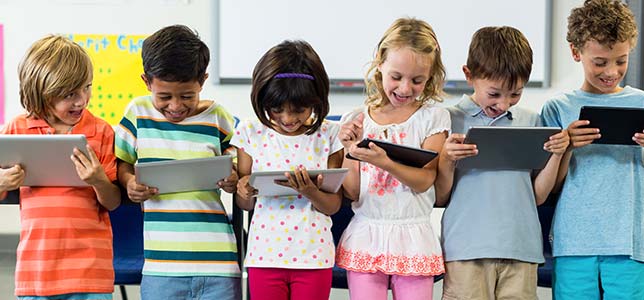
Image result for classroom technology

Image Source: https://thejournal.com/articles/2017/06/29/2-in-3-parents-say-classroom-tech-is-key-to-student-futures.aspx Creative Commons License
This work is licensed under a Creative Commons Attribution 4.0 International License.

Thursday, September 12, 2019

Blog Journal 1

Many things influence teachers and students to use aspects of technology in their classrooms. I believe that a desire to be innovative and progressive is a major reason why technology is advancing in classrooms all over the world. Another reason for the use of technology is to enhance the learning experience of students. Old and outdated learning practices are becoming a thing of the past, and they are being replaced with exciting technological advances that help a student understand and interact with subject matter better. If technology is not used in classrooms, students will be at a disadvantage because of how our world is wired today. I believe that technology will continue to be integrated more and more into classrooms daily because new technology is always being worked on and created, and it is very influential to students and teachers alike. 

ISTE standards are a wonderful way to keep students and teachers accountable for how they use and teach with technology in the classroom. There are numerous standards that the ISTE came up with, and these standards focus mainly on how a classroom should use technology to accomplish educational goals in a virtuous way. One standard that resonates with me is that of being a "digital citizen". This standard provides parameters for what a digital citizen should look like, such as understanding the weight of what we put online and how to use technology in a safe way in order to protect ourselves from the dangers on the internet. I feel as though I am a digital citizen because I have been taught how to use technology wisely my entire life. I never put anything permanent on the internet that I wouldn't want others to know about me, and I also use technology to connect with and encourage others through activities like group chats. One standard that I believe is outside of my skill set at the moment is that of a technology "leader". To be a technology leader, one must advocate for all students to have access to education enhancing technology and learn and bring in new technologies for the classroom. I feel as though I don't resonate as much with this standard right now because I am not a teacher yet, so I am still being taught about technology. I also do not advocate for technology access, but I really want to start making a difference in this area. This standard is something that I believe I will grow in as I get older and earn my teaching degree. 

I agree with calling young students today "digital natives". Digital natives are people that have grown up around technology, and they don't know of a time where technology wasn't in their world. I have definitely seen differences between the way that I use technology as a digital native and the way that my teachers use it as digital immigrants. First of all, because I believe I am more proficient in certain technological aspects than my teachers are, the process of learning by using technology is slowed down because the teachers have to figure out how to use the specific technology before beginning the lesson. I remember many instances in high school where the teachers had to call up students to help them work the technology at the time, whether it was an Ipad, computer, or projector. Other times, I noticed that teachers were inadequately using technology for lessons, such as when my math teacher used a confusing online program to give us our notes, when she could have just used the white board to take notes and erase without complicating things. I believe that when I become a teacher, I will also have differences between my knowledge of technology and my students' knowledge. I know that technology is continually advancing, and I don't think that I stay up to date with some of the newest technologies. In contrast, I believe that students I will teach in the future will still be more competent in certain technologies than I will be, just because I wasn't born into a world with smartphones and similar technologies like they were. I look around now and see two-year-olds with smartphones in their hands that can probably work them better than I can! Therefore, even though I am fairly proficient in using technology, I will still need to work very hard to include it in an adequate way in my classroom when I am a teacher. 


Creative Commons License
This work is licensed under a Creative Commons Attribution 4.0 International License.

Blog Journal 11

Learning about data collection and reporting has been very beneficial in helping me understand how I will work as a teacher. I think I will...